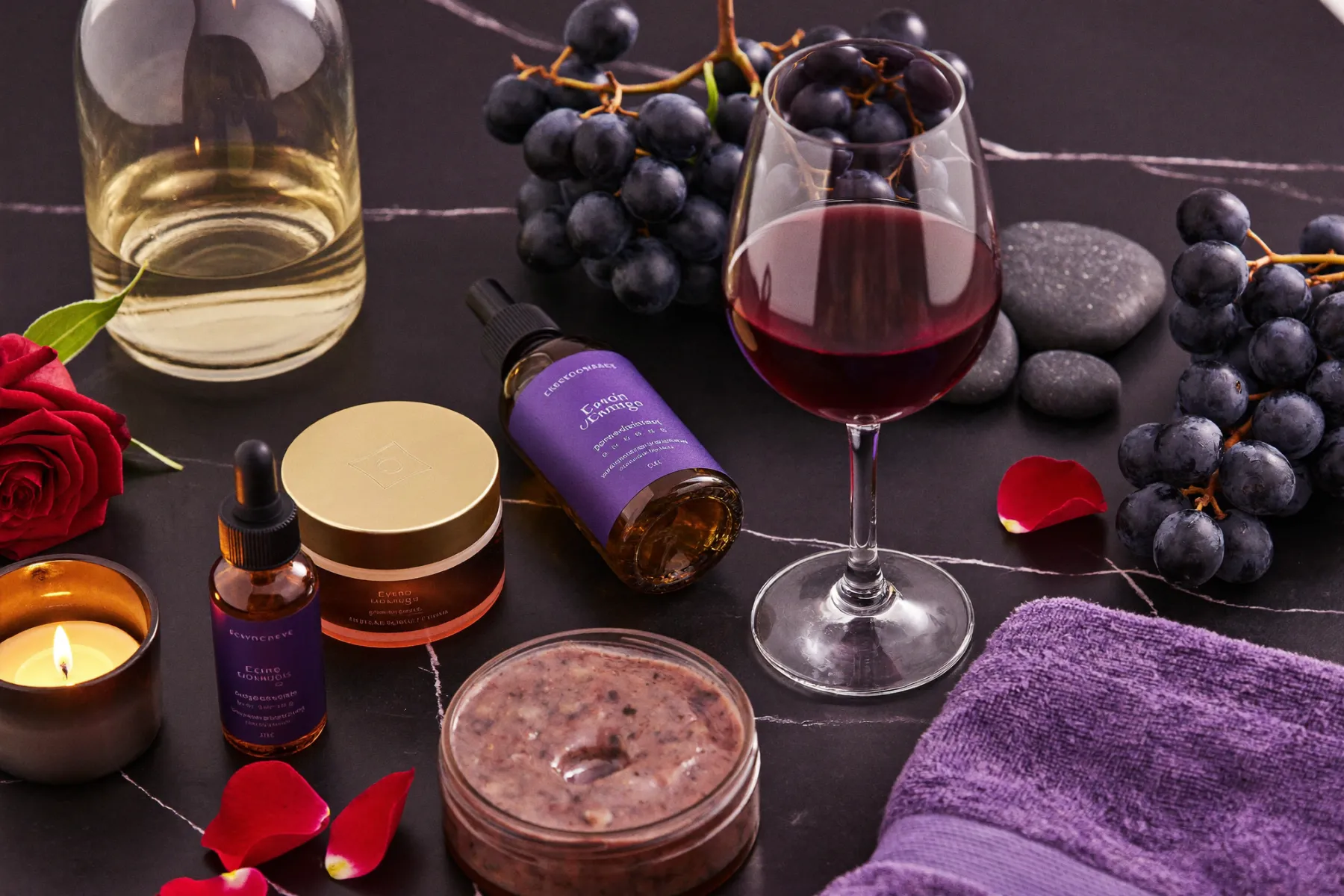
It all starts with something winegrowers have always known: nothing is lost in the grape. The skin, the pulp, the seeds, the sap, every part holds precious active ingredients.
What vinotherapy brought was a scientific eye on this intuition. In France, in the years that followed, researchers looked closely at grape-seed and grape-skin extracts, revealing the antioxidant power of polyphenols. From this meeting of the vine and the laboratory a new way of caring for the skin was born, today at the heart of every wine spa.
The vine's active ingredients, one by one
Behind the word vinotherapy lies a little natural pharmacy. Here are the main treasures the grape places at the service of your skin.
Polyphenols
These are the vine's star antioxidants. Found in the skin, the pulp and the seeds of the grape, they help the skin defend itself against free radicals, the molecules involved in skin ageing.
Resveratrol
Concentrated in the skin of red grapes, resveratrol is one of the most studied molecules of the vine. In cosmetics, it is prized for its repairing and firming action on the skin.
Grape-seed oil
Obtained by pressing the seeds, it is rich in essential fatty acids and vitamin E. Light and penetrating, it nourishes the skin, softens it and leaves a silky finish, with no greasy effect.
Viniferine
Derived from the vine's sap, viniferine is valued in cosmetics for helping to even out the complexion and reduce the appearance of dark spots. A radiance-boosting active inherited straight from the vineyard.
Grape OPCs
Oligomeric proanthocyanidins, extracted notably from the seeds, are among the most powerful antioxidants in nature. Their study in France contributed greatly to the birth of vinotherapy.
Grape marc and wine yeast
Noble by-products of winemaking, they concentrate minerals and active ingredients. Used in body wraps or baths, they contribute to relaxation and to the comfort of the skin.
Benefits you feel all over the body
Nourished, plumped skin
This is the most immediate benefit. Grape-seed oil and the vine's active ingredients strengthen the comfort of the skin, help it retain water and give it back its suppleness. After a treatment, the skin looks softer, smoother and visibly more luminous.
A precious antioxidant effect
Our skin is exposed every day to the sun, to pollution and to stress, all factors that speed up its ageing. Grape polyphenols are among the most studied antioxidants for helping the skin cope with these aggressions. This is the whole point of vinotherapy's anti-ageing approach.
Lighter legs, stimulated circulation
The gentle heat of the bath, combined with extracts of red vine and grape seed, invites the microcirculation to wake up. The result: a sensation of light legs and a brighter complexion, as after a fine walk in the open air.
Deep relaxation of body and mind
We sometimes forget it, but the first benefit of a vinotherapy treatment is mental. The enveloping heat, the fragrances of ripe fruit, the low light and the silence act as a decompression chamber. The heart rate slows, the shoulders let go, the thoughts settle. The wine bath is as much a treatment for the skin as a treatment for the mood.

A wellness interlude, not a medical treatment
Let us be clear and honest: the wine spa is a wellness and beauty experience, not a medical treatment. The grape's active ingredients are precious for the comfort and radiance of the skin, but a wine bath does not cure an illness and does not replace medical advice. It is precisely in this balance that its charm lies: offering pleasure and care, without excessive promises.
The grape works no miracles. It does better: it turns a beauty gesture into a moment of pleasure.
This gentle science of the vine has inspired great cosmetics houses and exceptional spa rituals. To understand how the grape made its way from the vineyard to your bathroom, continue with our page devoted to vinotherapy and the brands of the vine.